

Aerospace video production in Mexico: how to document technical processes
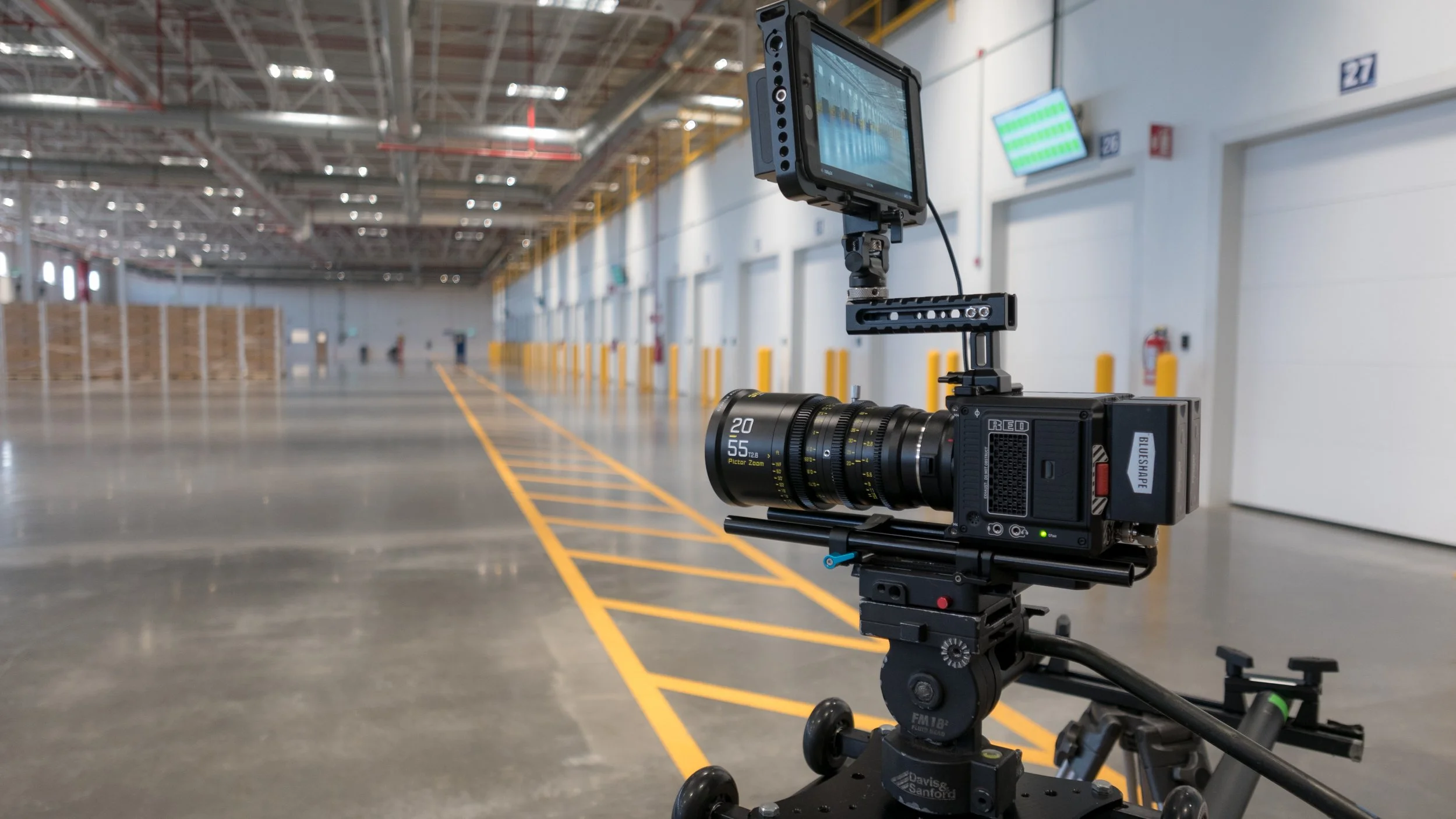
Production - Lava Studios
The aerospace industry has a communication standard that few video production companies truly understand.
It's not just that the processes are complex. It's that the way an aerospace company presents itself to its clients, auditors, partners, and potential talent has direct implications for contracts, certifications, and technical reputation. A poorly executed video in this sector isn't just a video that looks bad — it's a credibility problem.
At Lava Studios we've been producing video for aerospace companies in Mexico for over 15 years, particularly in Baja California and Sonora — two of the states with the highest concentration of aerospace manufacturing in the country. This article is a practical guide for communication, HR, and corporate relations teams that need to document technical processes on video without compromising operations or company confidentiality.
Why aerospace industrial video is different
When a conventional manufacturing company films its plant, the challenges are logistical: shift coordination, lighting in large spaces, machinery noise.
In an aerospace company the challenges include all of that plus an additional layer of complexity that completely changes how a production is planned and executed:
Confidentiality restrictions. Many aerospace companies work with clients that have strict requirements about what can and cannot appear on camera. Part numbers, technical specifications, component dimensions, even the names of certain clients may be subject to non-disclosure agreements. A production company without experience in the sector doesn't know what to ask or what to avoid.
Plant safety protocols. Aerospace facilities have access protocols, personal protective equipment requirements, and restricted areas that must be respected during filming. A production crew unfamiliar with these protocols generates operational interruptions and safety risks.
Technical precision in communication. Aerospace video cannot be vague. If the objective is to show an assembly process, a quality inspection, or a technical certification, the content must be precise without being compromising. That requires pre-production work with the company's technical managers — not just the communications department.
Lighting in technical environments. Aerospace facilities frequently have industrial lighting designed for operations, not for image. Making a complex technical process look clear and professional requires specialized lighting equipment and experience in advanced manufacturing environments.
What aerospace companies use video for
Aerospace companies in Mexico produce video for several distinct purposes, each with specific content and format requirements:
Presentation to international clients. When a company seeks a new contract with an aerospace OEM — an original equipment manufacturer like Boeing, Airbus, or their Tier 1 suppliers — the ability to show operations on video before a physical visit can be decisive. A well-produced process video communicates technical capability, operational order, and quality culture in minutes.
Audits and certifications. Some aerospace certifications such as AS9100 or Nadcap require process documentation. Video doesn't replace technical documentation, but it complements the presentation to auditors and demonstrates operational maturity in a way that written documents cannot.
Technical talent recruitment. The shortage of specialized technicians in aerospace manufacturing is a real problem in Mexico. A recruitment video that shows the facilities, the type of work, the available equipment, and the company environment attracts qualified candidates who wouldn't otherwise consider the opportunity.
Internal communication and training. Documenting standard procedures on video — assembly, inspection, material handling — reduces dependence on in-person instructors and standardizes operations across shifts, lines, and plants.
Public and institutional relations. Aerospace companies in Mexico frequently participate in industrial forums, international trade shows, and supplier development programs. An institutional video that communicates the company's track record, certifications, and capabilities is a public relations asset with recurring use.
How production in aerospace facilities is planned
Planning a shoot in an aerospace plant involves steps that don't exist in other types of production. An experienced production company follows them as standard. One without experience discovers them during the project.
Review of confidentiality restrictions before the script. Before writing any content, it's necessary to identify what can be shown, what can be mentioned, and what must be left out. This requires a meeting with the company's quality manager or legal department — not just the communications team.
Coordination with industrial security. The production crew must be briefed on the plant's safety protocols before filming: access zones, required protective equipment, evacuation routes, and emergency procedures. At Lava Studios we handle this as a standard part of our pre-production.
Shoot planning by zones and shifts. In an operating plant, the shoot must be planned to minimize impact on production. That means identifying which processes can be filmed without interrupting the line, which require a brief pause, and which must be documented at specific times.
Technical review of the script with the company's team. The technical content of the video must be validated by process managers before the shoot. A technical error in an aerospace video — an incorrect process description, a poorly communicated specification — can have operational and reputational consequences.
Filming equipment logistics. Cameras, lights, and sound equipment brought into an aerospace plant may require prior authorization. Some of the company's clients have requirements about which electronic devices can be in the facilities. This must be coordinated before the shoot day, not on the day itself.
What a well-produced aerospace video must show
The content of an aerospace video depends on the objective, but there are elements that consistently communicate capability and professionalism in this sector:
Operational order and cleanliness. Clean, organized facilities with visible signage communicate quality culture before the narrator says a single word. This isn't cosmetic — it's part of the technical message.
Processes in real operation. Videos with actors simulating processes are immediately detected in the industry. Aerospace clients want to see real operations, with real personnel, under real conditions. That requires production coordination on the plant floor — not a controlled set.
Visible certifications and standards. If the company has AS9100, ITAR, Nadcap, or equivalent certifications, the video must communicate them specifically — not just mention them in text, but show the processes that support them.
Testimonials from the technical team. The people who do the work — engineers, quality technicians, specialized operators — are the most credible asset that can appear in an aerospace video. A brief, specific testimonial from someone who knows the process firsthand has more impact than any corporate narration.
Technology and equipment. The machines, tools, and systems the company uses are part of the capability story. Showing them clearly — well lit, in operation — communicates investment, modernity, and real technical capability.
Frequently asked questions
How do we handle confidentiality of our clients and processes during filming?
The first step is clearly defining what can and cannot appear in the video before the crew enters the facilities. In practice this means a pre-production meeting with the quality manager or legal department to identify specific restrictions. During the shoot, the production director is responsible for ensuring nothing restricted is captured on camera. In post-production, the company has the opportunity to review the material before the final edit.
How long does it take to produce an aerospace industrial process video?
Depending on complexity, between 6 and 12 weeks from the first brief to final delivery. Pre-production in aerospace environments takes longer than in other sectors due to the additional coordination steps. If you have a specific deadline — a trade show, an audit, a client presentation — communicate it from the start.
Do we need to stop production to film?
Not necessarily. A well-planned production can document most processes without stopping the line. In cases where a brief pause is required — to reposition cameras or for a specific shot — this is coordinated in advance with the production area to minimize operational impact.
Can the video be used for international presentations?
Yes, and it's one of the most common uses. For presentations to international clients, we recommend producing Spanish and English versions from the same shoot. The additional cost of the English version is marginal compared to the cost of a second shoot.
What happens to footage that isn't used in the final video?
The raw footage recorded during the shoot belongs to the client company. Delivery and storage terms for raw footage must be specified in the contract. At Lava Studios we deliver the complete material at the close of each project.
Why Lava Studios for your aerospace project
Mexicali, Baja California, is one of Mexico's most important aerospace centers. We've been producing video in this environment for over 15 years — we know the protocols, understand the restrictions, and know how to document complex technical processes without compromising operations or client confidentiality.
We work in Spanish and English. We produce for clients in Mexico and the United States. And we understand that in the aerospace industry, the quality of the video is part of the quality of the company.
Does your aerospace company need to document its processes on video?
Tell us what you need to communicate and to whom. We'll respond within 24 hours with a specific approach for your project.
