

Recruitment video for industrial companies: how to attract technical talent
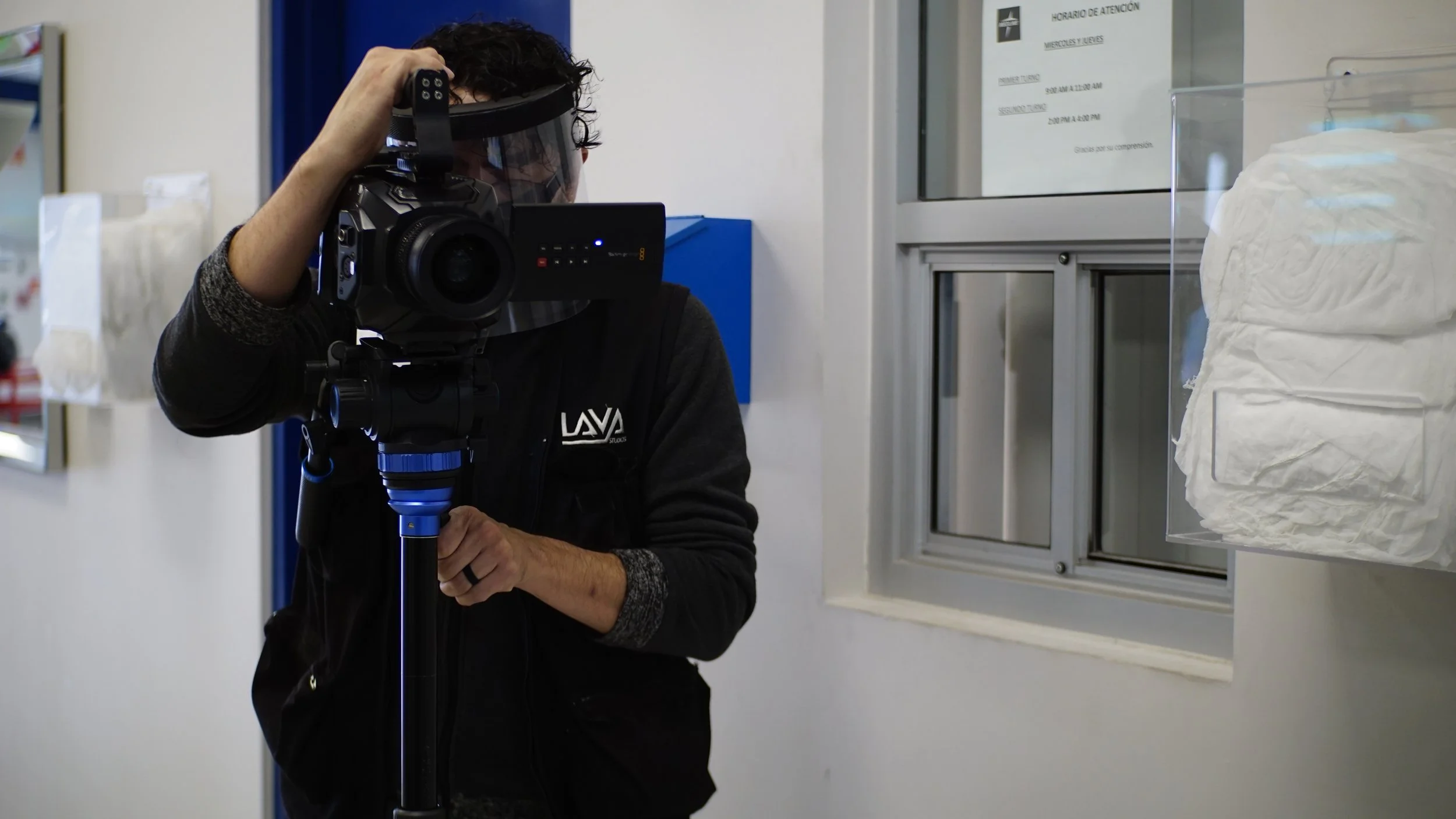
The shortage of qualified technical talent is one of the most expensive problems facing industrial companies in MeIt's not just a compensation problem. It's a visibility problem.
Qualified technical candidates — engineers, specialized technicians, operators with specific certifications — have options. They choose the companies that can clearly show them what they're going to find when they arrive to work there.
A job posting on an employment portal doesn't do that. A well-produced recruitment video does.
At Lava Studios we've been producing video for industrial companies in Mexico for over 15 years. We've seen firsthand how companies that invest in showing their culture and work environment attract more qualified candidates, reduce hiring time, and significantly lower turnover in the first months.
This guide explains how corporate recruitment video works, what it needs to show to actually work, and how to produce it without it looking like a television commercial.
Why recruitment video works in industry
The technical talent market in Mexico has a specific characteristic that makes video especially effective: qualified candidates evaluate companies before applying.
A aerospace technician with five years of experience doesn't send their resume to just any company. They research, compare, and make an informed decision about where they want to work. The same goes for a quality engineer or a CNC operator with specific certifications.
What they're looking for in that research is evidence that the company is what it claims to be. And the most powerful evidence a company can offer isn't a list of benefits in text — it's seeing the real plant, the real equipment, the real people who already work there.
Recruitment video is exactly that: visual evidence that working at your company is worth it.
Beyond attracting candidates, recruitment video solves two other frequent problems in industrial companies:
Reduces selection process time. Candidates who arrive at an interview after watching the recruitment video have expectations more aligned with the company's reality. There are fewer surprises, fewer misunderstandings, and a faster hiring decision.
Reduces early turnover. Turnover in an employee's first 90 days almost always has the same cause: expectations didn't match reality. A video that shows the work environment honestly — not idealized — attracts candidates who genuinely want to work there, and that translates into greater retention.
What differentiates an industrial recruitment video from a generic corporate announcement
The most common mistake in corporate recruitment videos is that they look like television commercials.
Inspirational music. Narration with phrases like "we're a family" or "everyone grows together here." Images of people smiling in conference rooms. None of this convinces a qualified industrial technician that your company is the right place for them.
What actually works is completely different:
Authenticity over production value. A video that shows the real plant, the real work, and the real people has more impact than a highly produced video with actors and idealized locations. Technical candidates immediately detect when something isn't genuine.
Specificity over generalities. "We offer an excellent work environment" says nothing. "Here you'll work with five-axis milling machines, in a temperature-controlled cleanroom, on projects for first-tier aerospace clients" — that actually tells a specialized technician something.
Real people talking, not corporate scripts. The most effective testimonials in a recruitment video are the ones that sound like conversations, not press releases. An operator who explains in their own words why they've been at the company for eight years is more convincing than any voiceover narration.
The work environment as protagonist. The facilities, the equipment, the organization of the production floor, break areas, the cafeteria — all of these elements communicate what it's really like to work at the company. Showing them without over-editing is part of the honesty candidates value.
What an industrial recruitment video must include
The specific content depends on the profile the company is trying to attract, but there are elements that consistently work in industrial recruitment videos:
An honest introduction to the company. Not the history from 1952 to the present — but what the company does today, which sector it operates in, what type of products or components it manufactures, and its position in the industry. Brief and specific.
The physical work environment. The facilities where the candidate is going to spend eight hours a day. Plant, work areas, common spaces. Showing this without filters is one of the elements most valued by candidates who have already had negative experiences with companies that didn't deliver what they promised.
The type of work and projects. For specialized technical talent, the type of work matters as much as the salary. Showing the technical complexity of the projects, the machinery used, and the level of specialization required attracts candidates who want that specific type of challenge.
Testimonials from the current team. Two or three people who already work at the company speaking in their own words about their experience — without a script, without rehearsed phrases. What they like about the work, how they've grown, what makes them stay. This is the hardest element to produce well and the most effective when achieved.
Development opportunities. Training, certifications, growth possibilities within the company. For young technical talent, this is frequently more important than the starting salary.
Practical information. Schedules, location, main benefits. Not everything — just enough for the candidate to know the company has competitive conditions without needing to read an HR policy.
Formats and distribution of the recruitment video
A recruitment video has more impact when it's adapted to the channel where it's going to be distributed. The same content can work in different formats for different platforms.
Main video — 2 to 3 minutes. The complete format for the company website, the careers section, and presentations at job fairs or technical universities. This is the video the candidate watches when they decide to research the company in depth.
Short version — 60 to 90 seconds. For LinkedIn and Facebook, where attention is limited and the candidate decides in the first seconds whether to keep watching. This version must capture the most attractive elements of the main video without losing authenticity.
Individual clips — 15 to 30 seconds. Specific fragments from the video — a testimonial, a plant shot, a work sequence — for Instagram, TikTok, or WhatsApp. Each clip can be used independently in an ongoing content strategy.
English version. For companies looking to attract technical talent from the United States or bilingual candidates — especially relevant in border cities like Mexicali, Tijuana, or Ciudad Juárez — an English version or subtitled version significantly expands the reach.
Planning these formats from the start of the project — not as later adaptations — allows all the content to be produced in the same shoot at marginal additional cost.
How much does a corporate recruitment video cost?
Cost varies depending on project complexity, number of testimonials, shoot days required, and formats needed.
As reference ranges for the Mexican market in 2026:
Basic recruitment video 1 shoot day, 2 to 3 testimonials, main version and one short version $35,000 – $60,000 MXN / $1,800 – $3,200 USD
Standard recruitment video 2 shoot days, multiple company areas, 4 to 6 testimonials, main version and social media clips $65,000 – $100,000 MXN / $3,400 – $5,300 USD
Complete recruitment video Multiple shoot days, Spanish and English versions, formats for all platforms $110,000 – $180,000 MXN / $5,800 – $9,500 USD
These ranges include pre-production, shoot, and post-production with final file delivery in the agreed formats.
Frequently asked questions
Do we need our personnel to know how to act for the testimonials?
No. The best testimonials are the ones that sound most natural — people talking about their work experience in their own words, without memorizing a script. The director's job during the shoot is to create the conditions for that to happen: a comfortable conversation, open questions, and the time needed for the person to relax in front of the camera. At Lava Studios we handle this as a standard part of our production process.
What if some employees don't want to appear on camera?
It's completely normal and not a problem. The video doesn't need to include everyone — it needs to include the right people, which are those who have something genuine to share and are willing to do so. Part of pre-production is identifying those people with the HR team before the shoot.
How long does it take to produce the video?
Between 4 and 7 weeks from the first brief to final delivery, depending on complexity. If there's a job fair, a university visit, or a specific recruitment period with a fixed deadline, communicate it from the start to plan the production calendar.
Can the video be updated when the facilities or equipment change?
Yes, and it's something we recommend planning from the start. A recruitment video has an average useful life of 2 to 3 years before the facilities, equipment, or company profile change enough to require an update. Producing the video with that perspective — showing elements that won't change quickly — extends its useful life.
Can we use the video at job fairs and technical universities?
Yes, and it's one of the most effective uses. A recruitment video that plays at a job fair booth or in a university presentation does the communication work that would otherwise require several minutes of conversation. Specify this use from the start to ensure the format and resolution are appropriate for large screens.
Recruitment video as investment, not expense
Personnel turnover in manufacturing has a real and measurable cost: recruitment, selection, training, time until the new employee reaches expected productivity. In specialized technical roles, that cost can represent several months of salary per position.
A recruitment video that attracts more qualified, better-aligned candidates reduces that cost directly and sustainably. It's not a communication expense — it's an investment in team quality.
At Lava Studios we've produced recruitment videos for companies competing for the same technical talent in Baja California. The ones with video consistently win that competition.
Does your company need to attract qualified technical talent?
Tell us what profile you're looking for and what sector you operate in. We'll respond within 24 hours with a specific approach for your project.
