

How to document a manufacturing line on video: a practical guide
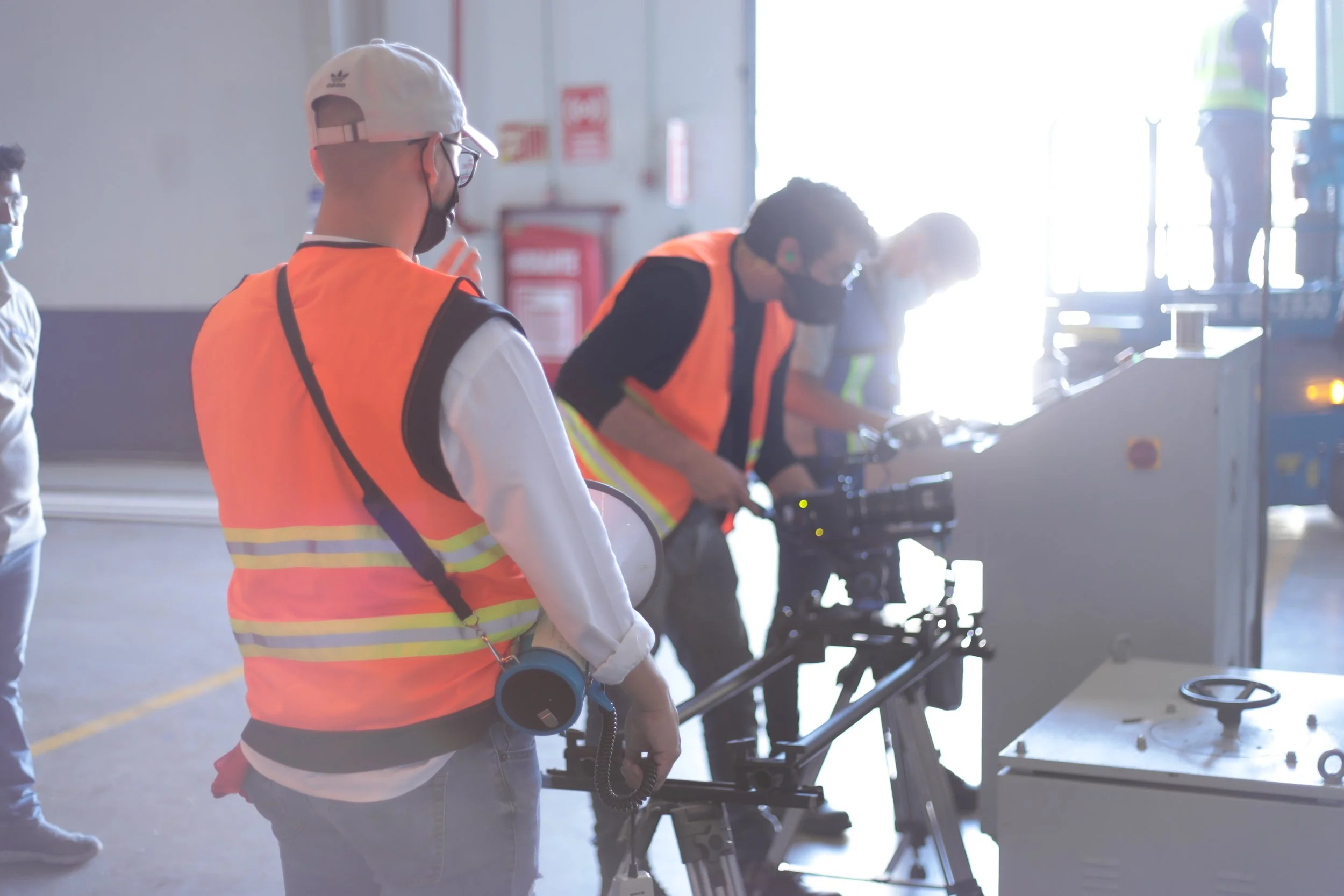
Documenting a manufacturing line on video is one of the most underused projects in industry — and one of the highest impact when done right.
Not because it makes for a spectacular visual production. But because a company that can show its production line on video has a concrete advantage over one that can only describe it in text or a slide deck.
Industrial clients make decisions based on evidence. A well-produced manufacturing video is evidence.
At Lava Studios we've been documenting manufacturing processes for companies in aerospace, medical devices, agribusiness, and advanced manufacturing in Mexico for over 15 years. This guide explains how that process works — what it requires, how it's planned, and what a manufacturing video needs to show to actually accomplish its objective.
Why manufacturing companies need process video
Most manufacturing companies in Mexico have two communication problems that video solves directly.
The first is distance from their clients. Many Mexican manufacturers work with clients in the United States, Europe, or Asia who can't visit the plant frequently — or who need to evaluate a supplier before committing to a visit. A process video allows that client to see the real operation without requiring a trip.
The second is the difficulty of communicating technical capability in text. Describing in a PDF that you have state-of-the-art machinery, certified processes, and a qualified technical team is far less convincing than showing it. Video makes visible what text can only mention.
Beyond these two structural problems, there are specific situations where manufacturing video has immediate impact: supplier qualification processes, quality audits, industrial trade shows, and supplier development programs where the company needs to demonstrate capability before being evaluated on site.
What types of content a manufacturing line video includes
A manufacturing video isn't a single format. Depending on the objective, it can take different forms with different content and approaches.
Process documentary. Shows the complete production flow — from raw material receiving to finished product — in a sequential and narrative way. It's the most comprehensive format and the most used for presentations to new clients or in supplier approval processes.
Technical capability video. Focuses on machinery, measurement equipment, inspection systems, and the technologies the company uses. Communicates infrastructure investment and technical capability without necessarily showing the complete process.
Certification and quality video. Documents in-process controls, inspection procedures, traceability systems, and the quality standards the company applies. Widely used in regulated sectors like medical devices or aerospace.
Finished product video. Shows the final product in detail — finishes, tolerances, packaging — with emphasis on visual quality and technical precision. Useful for companies that sell directly to buyers who evaluate the product before placing an order.
Facilities video. A visual tour of the facilities — plant, warehouses, laboratories, offices — that communicates the scale, order, and infrastructure of the company. Works well as a complement to a process video or as an independent piece for general context.
How a manufacturing line shoot is planned
Planning a shoot on an active manufacturing line has specific considerations that determine whether the project goes smoothly or generates operational problems.
Define the objective before planning the content. The first question isn't what we're going to film but for what purpose and for whom. A video for a technical client evaluating capabilities requires a different approach than one for an industrial trade show or for recruitment. The objective defines the content, tone, and level of technical detail.
Map the process before the shoot. Before the production crew enters the plant, the process manager should walk through it with the production director to identify the key stages, possible angles, access restrictions, and the moments of the process that have the greatest visual and narrative impact.
Coordinate with production to minimize operational impact. A well-planned shoot doesn't stop the line. In most cases it's possible to document processes in normal operation with minimal adjustments. Moments that require a brief pause — to reposition equipment or for a specific shot — are coordinated in advance with the production area.
Identify confidentiality restrictions. Before the shoot it's necessary to define what can be shown and what cannot — part numbers, technical specifications, client names, component dimensions. This definition must be made with the legal or quality team, not just communications.
Plan lighting for industrial environments. Manufacturing plants have lighting designed for operations, not for image. Making processes look clear and professional requires additional lighting equipment and experience in industrial environments. Lighting is one of the factors that most differentiates a professional manufacturing video from an amateur one.
Consider the audio. Manufacturing plants are noisy environments. The sound of machinery in operation can be part of the video — it communicates scale and activity — or it can be a problem if the objective is to capture personnel testimonials. This must be planned in pre-production, not solved on the day of the shoot.
What a manufacturing video must show to actually work
The content of a well-produced manufacturing video isn't a list of technical features narrated over footage of machines. It's a capability story the viewer can evaluate with their own eyes.
The complete process, not just the photogenic moments. It's tempting to show only the most modern machinery or the most impressive finishes. But a technical client evaluating a supplier wants to see the complete flow — including quality controls, material handling, and inspection procedures. The consistency of the process is as important as any specific machine.
Personnel in real operation. Operators, technicians, and engineers working are the most credible element of any manufacturing video. Not actors, not posed shots — real people doing their jobs. That communicates experience and competence in a way no narration can replicate.
Operational order and cleanliness. The state of the facilities — signage, order on the production floor, cleanliness of work areas — communicates quality culture before a single word is spoken. In industry, visible order is a direct signal of operational control.
Technology and equipment. Machines, measurement instruments, inspection systems, and specialized equipment are part of the capability argument. Showing them in operation — well lit, in context — communicates real investment and technical capability.
Visible quality controls. Inspection procedures, traceability systems, and in-process controls are the content most valued by technical clients and auditors. Showing them explicitly in the video communicates operational maturity in a way few companies take advantage of.
Common mistakes when producing manufacturing video
After 15 years producing this type of content, we've seen the same mistakes repeat across companies of all sizes.
Filming without a clear objective. "We want a video of our plant" is not an objective. An objective is "we want the purchasing engineers at our client in California to be able to see our stamping line before the supplier approval meeting next month." The clarity of the objective determines everything else.
Showing only what looks good instead of what matters. The most photogenic areas of a plant aren't always the most relevant to the client. A video that shows the modern reception area but omits the main production line doesn't serve its purpose.
Not involving the technical team in pre-production. The communications or HR team doesn't always know which aspects of the process have the greatest technical value for the client. Involving the production manager or quality manager in content planning makes the video significantly more relevant.
Underestimating pre-production time. A well-planned manufacturing video requires more pre-production than a conventional institutional video. Process mapping, coordination with production, restriction definition, and technical shoot planning take time. Trying to compress that stage almost always results in problems during the shoot.
Ignoring audio. A manufacturing video without quality audio — whether music, narration, or well-managed ambient sound — loses half its impact. Audio is half the video and frequently the least planned element in this type of production.
Frequently asked questions
How long does it take to document a manufacturing line on video?
A standard project takes between 5 and 8 weeks from the first brief to final delivery. More complex projects with multiple lines, several locations, or versions in more than one language can take 10 to 14 weeks. Pre-production time in manufacturing is longer than in other types of production due to the additional coordination steps with the technical and operational team.
Do we need to stop the line to film?
In most cases no. A well-planned production can document processes in normal operation. Moments that require a brief pause are coordinated in advance to minimize impact. In some processes where safety or process precision doesn't allow the crew to be present during operation, we plan the shoot during transition moments or during test runs.
What about the confidentiality of our processes and clients?
Before the shoot we clearly define what can and cannot appear on camera. In post-production, the company reviews the material before the final edit. The contract specifies that the rights to the material belong to the client and that Lava Studios cannot use the material for any purpose without explicit authorization.
Can the video be adapted for different audiences?
Yes, and it's something we recommend planning from the start. The same shoot can produce a detailed technical version for engineering clients, a more institutional version for trade shows and general presentations, and a short version for social media or LinkedIn. Planning these versions from the shoot significantly reduces the total cost compared to separate productions.
Can you produce the video in English for our international clients?
Yes. For companies whose clients are primarily international, we produce content entirely in English or in bilingual Spanish-English versions. This includes script, direction, voiceover, and on-screen text.
Why Lava Studios for documenting your manufacturing process
We've been documenting manufacturing processes in Mexico for over 15 years — in advanced manufacturing, aerospace, medical devices, agribusiness, and technology plants.
We understand how plants work in operation, how to coordinate with the technical team without interrupting production, and how to communicate manufacturing capability in a way that resonates with international industrial clients.
We work in Spanish and English. We produce for clients in Mexico and the United States.
Does your company need to document its manufacturing process on video?
Tell us what you want to show and to whom. We'll respond within 24 hours with a specific approach for your project.
